How Occupational Noise Impacts Hearing Health
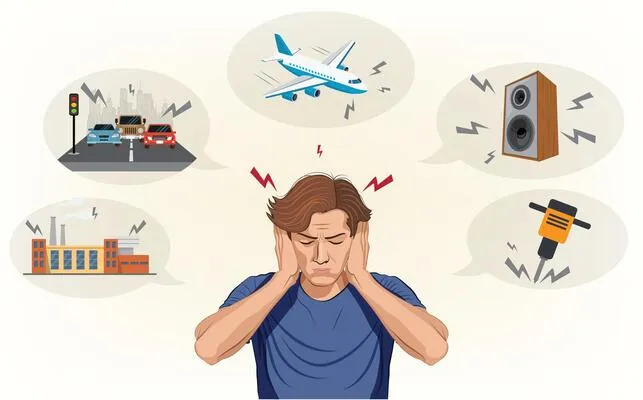
Occupational noise impacts not only hearing health but also overall health, productivity, and safety. So what can be done to protect workers?
This is a subject that has taken a back seat with workers, bosses, and company owners for WAY TOO LONG. It is time for this important subject to get noticed before it is too late and the damage has already been done.
The percentage of workers who suffer from noise-related hearing health issues varies depending on the industry, region, and the type of health outcome. Here are some statistics to provide context:
Noise-Induced Hearing Loss (NIHL):
- According to the World Health Organization (WHO), approximately 16% of hearing loss globally is attributed to occupational noise exposure.
- In the U.S., the CDC estimates that 22 million workers are exposed to hazardous noise each year, with about 12% experiencing hearing difficulties due to workplace noise.
These numbers highlight the widespread impact of occupational noise and emphasize the need for effective workplace noise management.
Let’s keep in mind: The #1 way to prevent hearing loss and/or deal with tinnitus is to address it as soon as possible! Early treatment can make all the difference. For more information on hearing loss, tinnitus, diabetes, dementia, and how they’re connected, visit us anytime at https://momentumaudiology.com
Noise is a prevalent physical hazard in many workplaces, posing significant risks to workers’ health and well-being. Beyond the well-documented auditory effects, such as noise-induced hearing loss (NIHL), exposure to high levels of occupational noise has been linked to various non-auditory health issues, including cardiovascular disorders, psychological stress, and decreased productivity.
Most importantly, from the standpoint of an audiologist, prolonged exposure to loud noise in the workplace is a leading cause of NIHL. Studies indicate that occupational noise exposure accounts for approximately 7% to 21% of hearing loss among workers, with lower percentages observed in industrialized countries where preventive measures are more prevalent.
Preventative Measures
Preventing the adverse effects of occupational noise involves implementing comprehensive hearing conservation programs. Regulatory bodies, such as the Occupational Safety and Health Administration (OSHA) in the United States, mandate that employers implement such programs when noise exposure equals or exceeds an 8-hour time-weighted average of 85 decibels. These programs typically include regular monitoring of noise levels, provision of personal protective equipment like earplugs or earmuffs, employee training, and regular hearing assessments.
Engineering controls, such as modifying or replacing equipment to reduce noise at the source, and administrative controls, like rotating workers to limit exposure time, are also effective strategies. Additionally, promoting a culture of safety where workers are encouraged to use hearing protection and participate in hearing conservation programs is crucial.
Recent studies highlighting the risks of occupational noise exposure include:
Impacts of noise-induced hearing loss on sleep, health, and workplace: Multi-group analysis – PMC
Interventions to prevent occupational noise-induced hearing loss – PubMed
Aside from knowing the laws that your employer must be following to prevent noise-induced hearing loss, workers should at all times be vigilant (know when you are most at risk where you work), wear ear protection as provided by your employer, never remove any absorbent materials, limit your exposure to noise, talk to your manager if you are concerned, and attend hearing tests often (which may be arranged by your employer).
Want to know more about noise-induced hearing loss? Please contact us today here
What to Expect on Your First Visit
Get to Know You & Understand Your Symptoms
Discuss Your Treatment Goals & Medical History
Determine Your Stage of Hearing Loss or Tinnitus
Answer All of Your Questions or Concerns
Begin a Custom Treatment Plan
Visit our Utah & Wyoming Hearing & Tinnitus Health Care Offices
Draper, UT
Hours: Mon - Thurs 9AM - 5PM, Fri 9AM - 3PM
Address: 1136 East Draper Parkway, Draper, UT 84020
Phone: (385) 274-2586
Evanston, WY
Lander, WY
Hours: Mon - Thurs 9AM - 5PM, Fri 9AM - 3PM
Address: 8168 WY-789, Lander, WY 82520
Phone: (307) 438-8341
Layton, UT
Hours: Mon - Thurs 9AM - 5PM, Fri 9AM - 3PM
Address: 755 West Antelope Drive, Layton , UT 84041
Phone: (385) 383-7162
Lehi, UT
Hours: Mon - Thurs 8AM - 5PM, Fri 8AM - 4PM
Address: 3668 W 2150 N St 3rd Floor, Lehi, UT 84043
Phone: 385-287-6070
FAX: 385-476-8587
Ogden, UT
Hours: Mon - Thurs 9AM - 5PM, Fri 9AM - 3PM
Address: 5748 South Adams Avenue Parkway, Ogden, UT 84405
Phone: (801) 479-3346
Provo, UT
Hours: Mon - Thurs 8AM - 5PM, Fri 8AM - 3PM
Address: 1055 North 300 West, Suite 212, Provo, UT 84604
Phone: 801-852-9684
Provo – Pediatric Clinic
Hours: Mon - Thurs 8AM - 5PM, Fri 8AM - 3PM
Address: 1055 N 300 W, Suite 311, Provo, UT 84604
Phone: 385-384-1448
Rock Springs, WY
Hours: Mon - Thurs 9AM - 5PM
Address: 1573 Dewar Drive, #2 Rock Springs , WY 82901
Phone: (307) 362-8221
Spanish Fork, UT
Address: 692 Market Place Dr, Suite 201 Spanish Fork, UT 84660
Phone: 385-448-0446
FAX: 385-476-8448